Traditionally, time, cost and quality are the fundamental criteria used in measuring project success, known as the ‘iron triangle’.
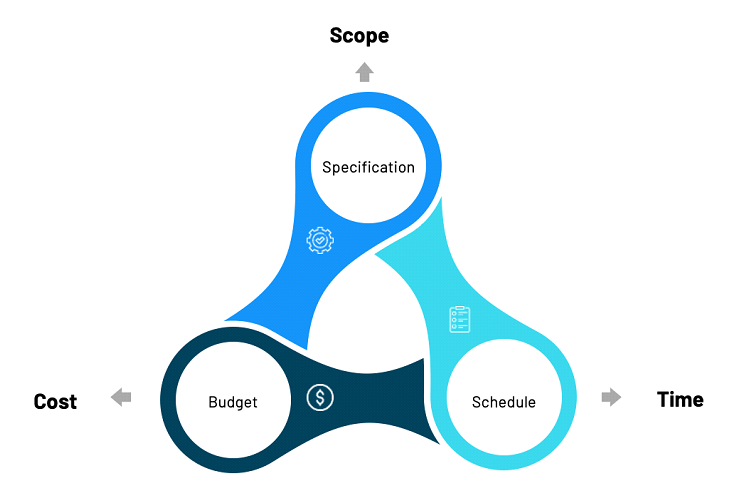
But should project success be restricted to just these criteria? There are many schools of thought that say they shouldn’t. Prof. Jeffery Pinto argued as far back as 1987 that project success should include psychological measures such as top management support, team members’ satisfaction etc; and whilst this was viewed as extreme at the time, it led to a rethink of the traditional model. As a result, measures such as stakeholder satisfaction are now firmly established.
Is environmental considerations/sustainability emerging as a new constituent of the ‘Iron Triangle’?
I think we are seeing signs that it is going to be just as important as the classic constituents of the iron triangle (cost, time and quality). This thinking is more mature in some fields than others. Construction is an area where there has been a growing focus on sustainability as a project success measure. UK government has been one driver of this trend, setting targets for the industry to improve its environmental credentials such as the achievement of zero carbon for new buildings by as far back as 2019. The UK government has now gone by requiring projects to comply with new regulatory requirements, for example, in 2019, the UK became the first major economy to legislate to achieve greenhouse gas emissions neutrality referred to as Net Zero target by 2050 (Dixon, Bell and Brush, 2022)
But the government is not the only driver of environmental considerations as a project management objective. The private sector is increasingly embracing Environmental Social and Governance (ESG) consideration, seeking to demonstrate ethical standards and incorporate broader social and environmental considerations into their balanced scorecards and strategic dashboards. This ultimately trickles down to the success measure of individual projects required to achieve their strategic plans.
Dual benefits of sustainability
Savvy clients are also increasingly using sustainability as an enabler to help achieve cost reduction, time optimisation and quality improvement through the implementation of a whole life costing strategy. They are advocating that cost should be looked at over the whole life of a project as opposed to a myopic short-term view, while quality should be measured on environmental robustness to cope with the future.
Taking a holistic view of project success measurement which incorporates sustainability criteria, can result in a ‘win-win’ situation for both clients and contractors. If companies incorporate this requirement and expectation into our service offering, it has the potential of increasing their clients’ satisfaction with the ripple effect being more successful tenders and repeat business. The question that comes to mind is…
”All this sounds like a great idea in theory, but how can this be implemented ?”
In practice, take the example of the London 2012 Olympics, the Olympic Delivery Authority (ODA) had to “agree and promote sustainable development and procurement policies, including commitments to sustainable energy and waste management goals”.
In order to achieve this overarching sustainability project objective, the ODA set itself and its contractors targets that were embedded in success criteria of the various Olympic projects. This resulted in:
⦁ 42% reduction in carbon emissions from ready-mixed concrete compared to industry average
⦁ Achievement of 100% legal and sustainable timber
⦁ Avoidance of £1million of waste through sustainable design, procurement and construction processes
⦁ 90+% of construction waste diverted from landfill through a recycling and reuse strategy
Integrating environmental considerations objectives can help achieve cost, time and quality objectives
What might this mean for you? To provide some context, material supply and shortage are often cited as one of the critical factors responsible for project cost and time overrun. This can be combated by local sourcing and embracing sustainable supply chain and procurement principles. Project managers can also strive to integrate sustainability related activities at different stage of the project life cycle, for example, minimising or avoiding waste, introducing recycling schemes, reducing carbon footprint etc. These sustainability measures all contribute to the achievement of the quality and cost objectives.
The key point to note here is that sustainability is best considered across a project’s whole lifecycle. Not just during design or development, but through the operation and maintenance phases as well. Therefore, the traditional iron triangle will not be dismantled but supported by environmental considerations and sustainability as a key driver in the quest to achieve the classic project management objectives of time, cost and quality.
Prof. Yakubu Olawale
14/04/2024